






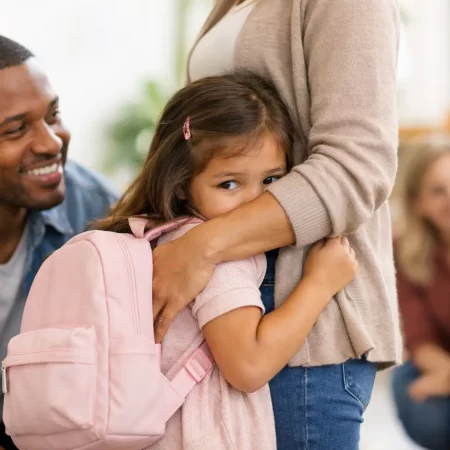
The first week of kindergarten can feel big even for outgoing kids. For children who hang back at birthday parties, whisper around new adults, or cling a little longer at drop-off, kindergarten readiness for shy children is less about pushing them to “speak up” and more about helping them feel safe enough to join in.
That distinction matters. Shyness is not a flaw to fix. Many shy children are thoughtful, observant, deeply empathetic, and careful in new situations. Those are strengths. The goal is not to turn a quiet child into the loudest voice in the room. It is to help that child walk into the classroom with enough confidence, language, and routine to participate in ways that feel manageable.
What kindergarten readiness for shy children really means
When families hear “kindergarten ready,” they often think of letters, numbers, pencil grip, and sitting still on the rug. Those skills matter, but shy children often need another layer of preparation. They benefit from practice with transitions, speaking to unfamiliar adults, entering a group, asking for help, and recovering when something feels awkward.
A child can know the alphabet and still struggle to tell the teacher they need the bathroom. Another child may count to 100 but freeze when asked to choose a center or join a partner activity. That is why school readiness has to include social-emotional readiness, not just academics.
During my 35 years as an educator, I saw many children walk into classrooms quietly observing before they were ready to jump in. Some of those children became the most thoughtful friends, careful listeners, and creative problem-solvers in the room.
One thing I learned as a special education teacher, school administrator, and professor is that readiness does not look the same for every child. Children grow best when skill-building is wrapped in encouragement, connection, and opportunities to practice at their own pace.
Start with temperament, not labels
Shy children are often described in ways that miss the full picture. Adults may call them hesitant, timid, or slow to warm up. Sometimes those words are accurate, but they can also make a child feel “less than” before kindergarten even begins.
A better approach is to notice patterns without assigning identity. Does your child need time before joining a group? Prefer one friend over many? Watch first, then participate? Those are useful observations because they help you prepare the child for specific moments that may feel hard.
It also helps to separate shyness from anxiety, language delays, or sensory challenges. A child who is quiet because they are overwhelmed by noise needs different support than a child who is quiet because they are carefully studying the room. If your child’s distress is intense, persistent, or affects daily functioning, it may be worth talking with your pediatrician or school team before kindergarten starts.
Build confidence through practice, not pressure
The most effective preparation for shy children is repeated low-pressure experience. Confidence rarely appears because an adult says, “You’ll be fine.” It grows when a child does something small, survives it, and realizes they can do it again.
Practice can look ordinary. Order a snack at the counter. Say hello to the librarian. Ask a coach where to put a water bottle. Visit a playground and stay long enough for your child to move from watching to trying. These moments teach an important lesson – new situations can feel uncomfortable and still turn out okay.
The key is pacing. Some children can jump right into a class or camp. Others need a shorter visit first, with a familiar adult nearby. There is a trade-off here. Too little exposure keeps a child stuck, but too much too fast can reinforce fear. Gentle repetition usually works better than one dramatic “big kid” push.
Use stories to rehearse kindergarten moments
For shy children, stories can make the unknown feel knowable. A read-aloud gives children language for feelings, a chance to picture routines, and an emotional buffer. It is easier to talk about a character who feels unsure than to ask a child to explain their own worries on the spot.
Rhyming stories are especially helpful because rhythm supports memory and predictability. Children often absorb social language from repeated reading – greeting others, taking turns, noticing emotions, and trying again after a hard moment. That is one reason story-based school readiness tools can be so powerful.
This belief is one of the reasons I created the Dilly Duck and Friends series. Stories give children a safe place to practice big feelings, friendships, and new situations before they experience them in real life.
In Dilly Duck Plans a Parade, Dilly and his friends discover that everyone sees and experiences the world a little differently. Through kindness, patience, and teamwork, children learn an important lesson: our differences are not obstacles. They are part of what makes every friend special.
Teach the exact words shy children may need
A common challenge for shy children is not that they have nothing to say. It is that they cannot retrieve the words quickly when they are nervous. Kindergarten goes more smoothly when children have ready-made phrases they can practice ahead of time.
Try short scripts such as “Can I play too?” “I need help.” “Where does this go?” “I’m still using that.” “Can you say it again?” and “I need the bathroom.” Practice them during play, in the car, or with stuffed animals. Keep your tone light. You are not drilling for performance. You are giving your child verbal handholds.
This kind of rehearsal works best when paired with pretend play. Set up a classroom at home. Be the teacher. Let your child be the student, then switch roles. Act out lining up, hanging a backpack, choosing an activity, introducing themselves, and asking a classmate to share blocks. What feels playful to adults is often serious preparation for children.
Make routines feel familiar before school begins
Shy children tend to do better when the structure around them feels predictable. Kindergarten includes many transitions, and transitions are often where hesitation shows up first.
A few weeks before school starts, begin practicing parts of the day your child will need to manage. Wake up at a school-friendly time. Eat breakfast with enough time to spare. Put on shoes, pack a backpack, and leave the house without a scramble. If possible, visit the school, playground, or front entrance so the setting feels less mysterious.
Photos can help too. If you know the teacher’s name, classroom, or school building, make a simple picture sequence of what the morning will look like. For some children, seeing the order of events lowers stress more than repeated verbal reassurance.
Support friendship without forcing it
One quiet fear many families carry is this: What if my child does not make friends? It is a real concern, but friendship in kindergarten rarely follows an adult timetable. Some children connect on day one. Others spend weeks simply learning the social rhythm of the room.
Instead of asking, “Who did you play with?” try gentler questions: “What made you smile today?” “Who sat near you?” “What center did you visit?” These questions honor connection without making friendship feel like a test.
If you have the opportunity, a short playdate with one future classmate can help. One familiar face in a new room can make a difference. But if that is not possible, do not assume your child is at a disadvantage. Warm teachers often know how to pair children thoughtfully and create soft entry points into play.
Work with the teacher early and honestly
A good teacher does not need your child to be outgoing. They do need insight. A brief, respectful note before school starts can be helpful. Share what supports your child, what situations may cause them to shut down, and what strengths you want the teacher to see.
You might say that your child warms up slowly, responds well to gentle invitations, and may need time before speaking in a group. You can also mention motivators – animals, art, building, books, helping jobs. Teachers can use those strengths to build connection.
What helps less is apologizing for your child’s temperament or predicting failure. Children often grow in surprising ways when adults communicate calm confidence.
Celebrate brave, not loud
Shy children are often praised when they perform outgoing behavior, but that can send the message that quiet is disappointing. A healthier goal is to celebrate brave effort in all its forms.
Bravery might mean walking into class without tears, raising a hand once, answering the teacher quietly, standing in line independently, or watching group time without hiding. Progress may look small from the outside and still feel enormous to the child.
Notice the effort specifically. “You told your teacher you needed help.” “You stayed at circle even when it felt new.” “You watched first and then joined.” This helps children connect courage with action, not personality.
Kindergarten readiness for shy children grows in these small moments of trust. Not all at once. Not on a schedule someone else sets. With patience, warm preparation, and opportunities to practice, shy children can enter school as themselves – observant, thoughtful, gentle – and still be fully ready to learn, belong, and thrive.
From My Bookshelf 📚
After 35 years as an educator, I know children learn best when they are curious, connected, and having fun. That belief inspires every book I write.
Explore my award-winning children’s books, playful learning activities, and free resources for families and educators at:
www.bookchatterpress.com
Stories that teach. Characters that care. Learning that feels like fun.