





A toddler bouncing along to Twinkle, Twinkle Little Star may look like pure fun, but in my years as an educator, I learned that those simple sing-song lines are doing far more than filling a quiet moment. When parents ask me, why are nursery rhymes important, my answer is always the same – they help children build the foundation for language, listening, memory, and joyful connection long before formal reading begins.
I have seen this in classrooms, in homes, and in one-on-one moments with children who needed a gentler path into learning. A nursery rhyme is short, predictable, and playful. That combination matters. Young children learn best when they feel safe, engaged, and invited to join in, and rhymes naturally create that kind of learning space.
Why are nursery rhymes important in early childhood?
Nursery rhymes give children a chance to hear how language works. They notice repeated sounds, familiar word patterns, and the natural beat of speech. Before a child can read print on a page, they need to hear the music inside language. Rhymes help them do that.
I often tell families that children do not become strong readers by memorizing letters alone. They also need to hear that cat and hat sound alike, that words can be broken into smaller parts, and that speech has rhythm and flow. Nursery rhymes make those ideas feel light and natural instead of forced.
There is also something wonderfully comforting about repetition. Children love hearing the same rhyme again and again because each round gives them a chance to anticipate what comes next. That confidence matters. It tells a child, I know this, I can say this, I belong in this learning moment.
Nursery rhymes build more than language
One of the biggest misconceptions I see is that nursery rhymes are only about entertainment. In truth, they support a whole collection of early skills at once.
When children clap along, fill in missing words, or act out a rhyme, they are practicing listening and attention. When they repeat phrases, they are strengthening memory. When they move their bodies to a steady beat, they are connecting language to movement in a way that helps learning stick.
I have worked with many children who needed extra support to stay engaged with books and spoken language. A full story could feel like too much at first. But a short rhyme with movement and repetition often opened the door. It gave them success quickly, and success makes children want to keep trying.
That is one reason I have always loved writing books with rhythm and playful language. In books like Baby’s Black & White Song Book, the bond between voice, pattern, and repetition is part of the learning. A child hears the beat of the words, watches your face, and begins connecting sound with comfort. That is early literacy wrapped in closeness and joy.
How rhymes support pre-reading skills
If you want the practical answer to why nursery rhymes matter, here it is – they help children prepare for reading in ways that are often invisible at first.
Rhyming words help children hear similarities and differences in sounds. Repeated phrases help them remember language patterns. Chanting and singing help them develop a sense of pacing and expression. All of that supports the later work of sounding out words, recognizing print, and reading with fluency.
I believe this is especially helpful for preschoolers and kindergartners, because they are still building the listening skills that reading depends on. We sometimes rush children toward worksheets and flashcards, but spoken language comes first. A child who can hear and play with words has a stronger base for everything that follows.
That does not mean nursery rhymes are a magic fix. Some children pick up rhyme easily, while others need more repetition, more movement, or more adult support. It depends on the child. The beauty of nursery rhymes is that they are flexible. You can sing them at bedtime, recite them in the car, clap them on the playground, or repeat them during a diaper change. Learning does not have to look formal to be real.
Why rhythm and repetition matter so much
Rhythm helps children predict language, and prediction builds confidence. When children know a line is coming, they often jump in with delight. That small moment of participation is powerful. It turns them from passive listeners into active communicators.
Repetition also gives children extra time to process words. For some children, especially those who are slower to speak or need more practice with listening, hearing the same phrase many times can make all the difference. I have watched children go from silent observers to eager participants simply because a familiar rhyme gave them enough comfort to join in.
Nursery rhymes also nurture connection
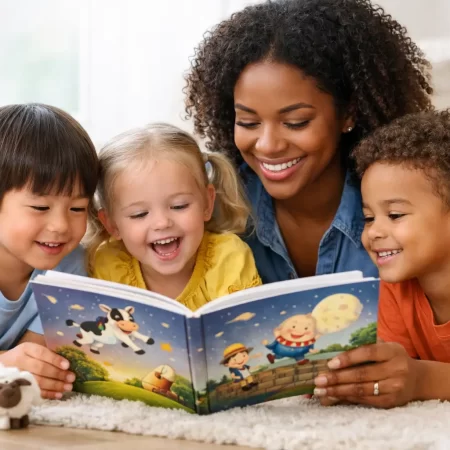
This part matters just as much as the academic side. Nursery rhymes create shared moments between adults and children. A bouncing knee game, a bedtime rhyme, or a silly song before lunch can become part of family life. Those routines carry warmth, and children remember that feeling.
I believe learning grows best in relationship. When a parent, grandparent, caregiver, or teacher recites a rhyme with expression and affection, the child is learning words, yes, but they are also learning that language is tied to love and attention. That emotional connection makes books, songs, and conversation feel inviting.
This is one reason I encourage families not to worry about performing perfectly. Your child does not need a polished singer. They need your voice, your smile, and your willingness to repeat a favorite rhyme one more time. That is enough. Often, that is more than enough.
Why are nursery rhymes important for social and emotional growth?
Nursery rhymes can also support emotional development, especially when children act them out together. They take turns, copy motions, wait for cues, and laugh at shared surprises. Those are early social skills, and they matter in classrooms and at home.
Some rhymes also help children handle feelings through predictability and play. A child who is nervous during transitions may calm down with a familiar chant. A child who feels shy in a group may join in more easily when everyone is saying the same repeated words. I have seen rhymes help children move from hesitation to participation in very gentle ways.
In my own books, I try to carry that same spirit of playful learning and emotional safety. Dilly Duck Plays All Day, for example, uses rhythm and lighthearted storytelling to help young children engage with counting, friendship, and togetherness. When language feels playful, children are more willing to stay with it.
What parents and teachers can do with nursery rhymes
You do not need a complicated lesson plan. Start small and stay consistent. Choose one or two rhymes your child enjoys. Say them slowly, add hand motions, and pause before the final word to let your child fill it in if they can. If they cannot, that is fine too. Listening counts.
I also encourage adults to make nursery rhymes interactive. Clap the beat. Tap the table. March around the room. Change a word and let children notice. Ask, “What rhymes with star?” and accept silly answers right alongside real ones. Word play is valuable, even when it is goofy.
There are times when traditional nursery rhymes may include outdated wording or ideas that do not fit every family. That is okay. You can choose the rhymes that feel right for your home or classroom, adapt language when needed, and mix classic verses with newer rhyming books. The goal is not perfection. The goal is joyful language practice.
If you are a parent wondering whether this really makes a difference, I can tell you with confidence that it does. These small, repeated moments build children from the inside out. They strengthen listening, spark speech, support memory, and make early literacy feel warm instead of pressured.
And if you are an educator, you already know that the children who thrive in language-rich classrooms are often the ones who have had many chances to sing, chant, repeat, and play with words. Nursery rhymes are not old-fashioned extras. They are one of the simplest tools we have for helping young children grow.
The next time a child asks for the same rhyme again, I hope you will say it gladly. Beneath that familiar little verse, important learning is taking root, one joyful line at a time.
From My Bookshelf 📚
After 35 years as an educator, I know children learn best when they are curious, connected, and having fun. That belief inspires every book I write.
Explore my award-winning children’s books, playful learning activities, and free resources for families and educators at:
www.bookchatterpress.com Stories that teach. Characters that care. Learning that feels like fun.