




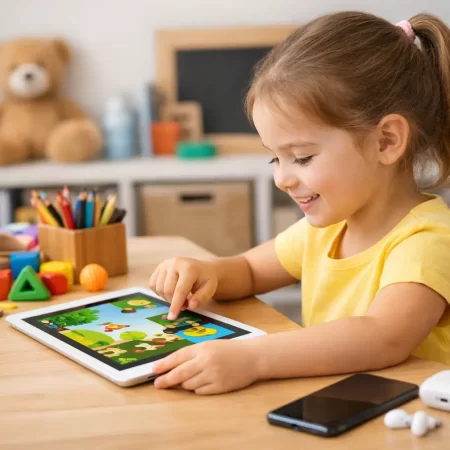
A child swiping confidently through a game can look impressively “school ready” at first glance. But kindergarten readiness is not about how fast a child taps a screen. The best kindergarten readiness apps support real early learning – letter knowledge, sound awareness, counting, listening, self-regulation, and confidence – without replacing hands-on play, read-aloud time, and conversation.
During my 35 years as an educator, I watched learning tools change dramatically, from classroom materials to the digital resources families use today. But one thing has never changed: children learn best through connection.
An app can introduce a letter. A caring adult notices the excitement when a child recognizes that letter in their own name. An app can practice a rhyme. A shared book creates the laughter, conversation, and memories that help language come alive.
Technology can be a helpful tool, but it was never meant to replace the power of talking, playing, wondering, and reading together.
That is the key question for families and teachers: which apps truly help, and which ones just keep children busy? For young learners, the strongest digital tools feel simple, joyful, and purposeful. They give children practice in small, manageable ways, then send them back into the real world ready to talk, move, notice, and try again.
What the best kindergarten readiness apps actually do
A good readiness app does not need flashy rewards or endless mini-games. It needs to match how young children learn. That means clear instructions, predictable routines, age-appropriate pacing, and activities tied to foundational skills.
For preschoolers heading toward kindergarten, those foundational skills usually include recognizing letters, hearing rhymes and beginning sounds, counting with one-to-one correspondence, sorting, shape recognition, following directions, and building stamina for short learning tasks. Just as important, children need chances to practice independence, manage frustration, and stay with an activity for a few minutes at a time.
The strongest apps also respect a truth many parents already feel: screen time works best when it stays light and intentional. An app can reinforce a concept, but it cannot replace building with blocks, listening to a story, drawing a picture, or talking through big feelings with a trusted adult.
10 best kindergarten readiness apps to consider
1. Khan Academy Kids
This is often one of the easiest starting points for families because it covers a wide range of early learning areas in one place. Children can explore early literacy, math, social-emotional learning, and logic activities through short, engaging lessons.
Its biggest strength is balance. The content feels playful, but the learning sequence is thoughtful. For parents who do not want to piece together five separate apps, this one offers a broad foundation. The trade-off is that some children may wander toward preferred activities unless an adult helps guide the experience.
2. PBS Kids Games
PBS Kids Games works especially well for younger preschoolers because it keeps the tone gentle and familiar. Many activities connect to trusted characters, which can lower resistance for children who are hesitant about learning tasks.
The educational value is strongest when adults choose games connected to specific goals, such as matching, counting, or listening. Left completely open-ended, it can feel more like entertainment than readiness practice. Still, for children who learn best through comfort and repetition, it is a strong option.
3. Starfall ABCs
Starfall has long been popular in early childhood settings, and for good reason. It introduces letters and sounds in a clear, memorable way. The design is simple enough for many young children to navigate with little help.
If your child needs extra support with letter recognition or phonics exposure, this app can be especially useful. It is narrower in scope than all-in-one learning platforms, so it works best as part of a larger readiness plan rather than the only tool.
4. ABCmouse
ABCmouse offers a large library of activities across reading, math, art, and beginning science. Some families appreciate the sense of structure and progression, especially if they want a more curriculum-like experience at home.
That structure can be helpful for children who enjoy routine and measurable progress. On the other hand, the amount of content can feel overwhelming, and some families may find that a child clicks quickly from one activity to another without going deep. It tends to work best when adults stay involved.
5. Endless Alphabet
This app is playful, visually rich, and especially strong for vocabulary development. Children move letters into place and hear word meanings in child-friendly ways, which supports language growth alongside letter familiarity.
It is not a complete kindergarten readiness tool on its own, but it does something valuable: it makes words feel exciting. For children who love humor, animation, and sound play, Endless Alphabet can build positive momentum around early literacy.
6. Moose Math
Moose Math focuses on early math skills such as counting, number recognition, sorting, addition readiness, and patterns. The games are short and approachable, which helps children practice without fatigue.
This is a good fit for families who want math support without a heavy academic feel. If your child already enjoys number play, it may become a favorite. If your child is less interested in math, adult encouragement and follow-up with hands-on counting activities can make a big difference.
7. HOMER
HOMER is often recommended for personalized early reading support. It lets families build a profile around a child’s interests and skill level, then offers targeted literacy activities.
That personalized approach can be helpful for children who need practice at just the right level. It may appeal most to families focused on pre-reading growth, especially letter sounds, phonological awareness, and early comprehension. As with many skill-based apps, the benefit is strongest when children also hear books read aloud every day.
8. Busy Shapes
Not every readiness skill is about letters and numbers. Busy Shapes supports visual discrimination, spatial reasoning, problem-solving, and persistence. Children manipulate shapes to fit them into matching spaces, which builds thinking skills they will use in classroom tasks.
This app is especially useful for children who become frustrated easily or need practice sticking with a challenge. It is quieter and less flashy than many alternatives, which some families will love and others may find too minimal.
9. Daniel Tiger for Parents
This one is a little different because it supports the adults as much as the child. Instead of drilling academic skills, it gives families songs, routines, and social-emotional strategies connected to everyday moments.
That matters because kindergarten readiness includes waiting, transitions, bathroom independence, emotional language, and classroom behavior. If a child knows letters but struggles to separate, follow directions, or recover from disappointment, social-emotional support may be the missing piece.
10. Teach Your Monster to Read
This app turns early reading instruction into a game with a clear sequence. It covers letter-sound relationships, blending, and early word reading in a way that feels motivating for many children.
It tends to work well for children who are ready for more direct phonics practice. For very young preschoolers, it may feel a bit advanced at first. In those cases, waiting a few months can be the better choice.
Like all learning apps, the greatest value comes when digital practice connects back to real conversations and shared experiences. Apps can be helpful tools, but they are not teachers, storytellers, or the caring voice beside a child as they discover the joy of reading.
For families looking to continue learning beyond the screen, I created Dilly’s Book Shop with stories and resources https://hollydibellamccarthy.com/dillys-book-shop/ols/categories/booksforkids designed to build early skills through connection, curiosity, and fun.
How to choose the best kindergarten readiness apps for your child
The best app for one child may be the wrong app for another. A child who needs confidence and gentle repetition may do better with calm, simple activities. A child who craves novelty may stay engaged longer with a game-based format. A child with speech or language delays may need extra emphasis on vocabulary, listening, and sound awareness.
It helps to begin with one question: what skill does my child need most right now? If the answer is letter recognition, choose a literacy-focused app. If the answer is counting and patterns, choose a math app. If the answer is transitions and emotional regulation, a parent-support or social-emotional app may do more good than another alphabet game.
It is also wise to watch how your child responds after using the app. Are they calm, proud, and ready to talk about what they learned? Or overstimulated, frustrated, and asking for more screen time without much retention? The child’s behavior after the activity often tells you more than the marketing copy.
Using apps without letting them take over
When families use readiness apps well, they usually keep them in a supporting role. Ten to fifteen minutes of intentional use is often enough for preschool-aged children. After that, the learning grows when adults carry the idea into real life.
If an app practices counting, count blueberries at snack time. If it teaches a letter sound, look for that sound on cereal boxes or street signs. If it introduces a feeling word, talk about a moment when your child felt that way. This is where screen learning becomes actual understanding.
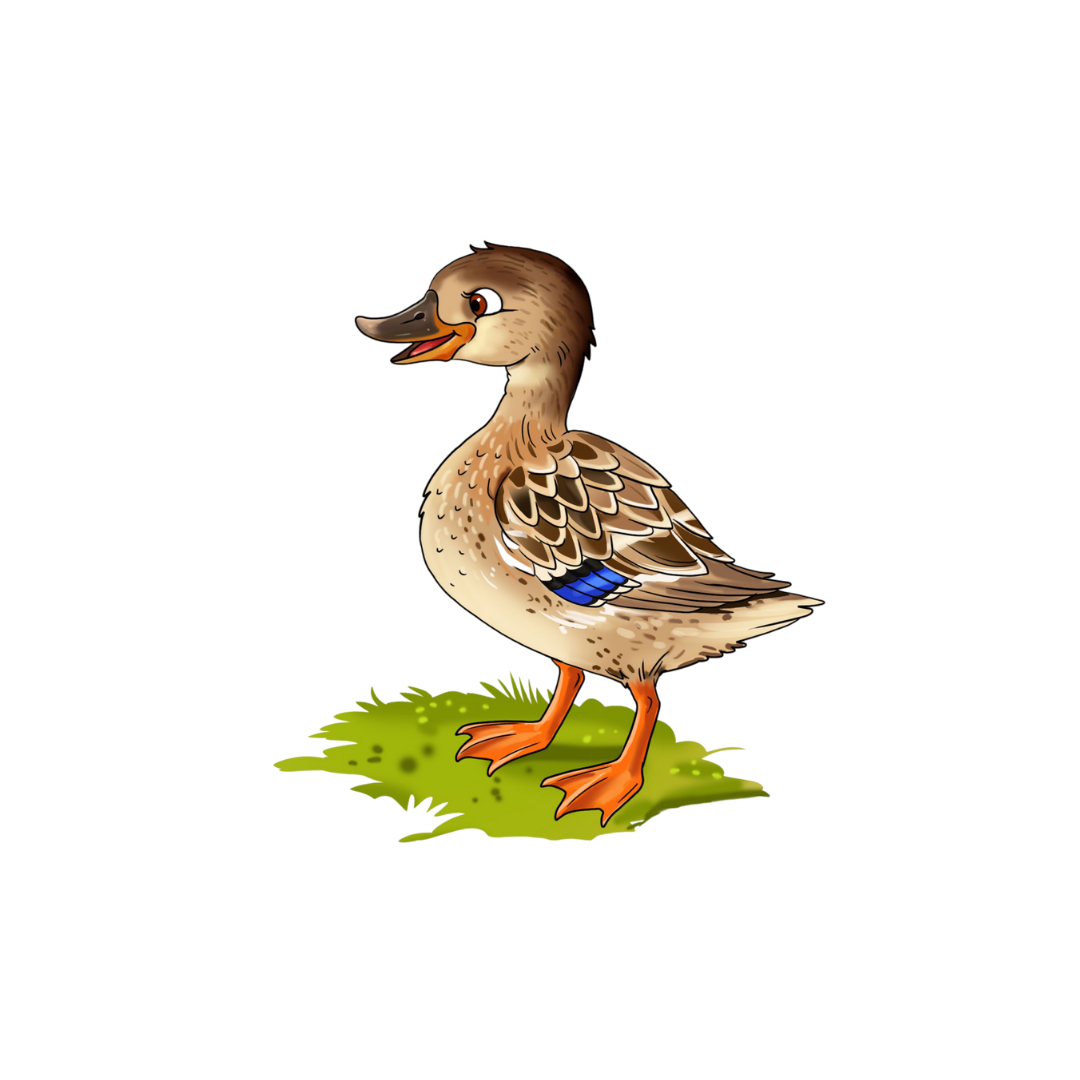
Reading together still matters most. Rhyming books, rich conversation, pretend play, drawing, outdoor exploration, and simple family routines do tremendous work in preparing children for school. This belief is also at the heart of why I create children’s books. Whether a child is counting with Dilly Duck Plays All Day, discovering letters and sounds with The Best Letter Club, or building reading confidence with Dilly & Pals See Me Read, the goal is not just the skill. It is the smile, conversation, and connection happening along the way.
Because the moments children remember most often happen beside someone they love.
What matters more than finding the perfect app
Parents and caregivers often feel pressure to choose exactly the right tool, as if one app will determine how kindergarten goes. Thankfully, readiness does not work that way. Children grow through steady exposure, loving support, repetition, and time.
An app can help practice a skill. A caring adult helps that skill stick. So choose tools that are gentle, clear, and developmentally sound, then keep making room for books, questions, conversation, and play. Those ordinary moments are still where school readiness grows best.
Continue the learning beyond the screen. Find my award-winning children’s books, playful activities, and free resources for families and educators at www.bookchatterpress.com. Each resource is created with the same goal: helping children build skills through stories, connection, and fun.
If you are deciding between one more app and one more story together, choose the story. Apps can teach children to tap, match, and practice. Shared reading teaches them to listen, wonder, laugh, ask questions, and feel connected.
Those are the moments that grow curious minds, kind hearts, and confident learners.